Heavy equipment transport demands more planning than standard cargo movement. The cargo is valuable, often oversized, sometimes non-running and usually connected to a site schedule. A clear plan protects the equipment, the road movement and the customer’s project timeline.
Why heavy equipment transport needs a separate planning process
Heavy equipment transport is different from normal commercial delivery because the cargo itself can affect route choice, trailer selection, loading method and site safety. A generator, excavator, compressor, container handling part or construction machine may have uneven weight distribution, fixed lifting points, low ground clearance or attachments that change the overall dimensions. These details should be reviewed before any vehicle is sent.
A separate planning process helps avoid costly site delays. The transport team should know whether the equipment can drive onto a trailer, whether a ramp is required, whether a crane or forklift will load it, and whether the delivery site has enough space for unloading. The customer should provide photographs, weight plates, dimensions and any handling instructions from the manufacturer or site engineer.
Lowbed, flatbed and trailer selection
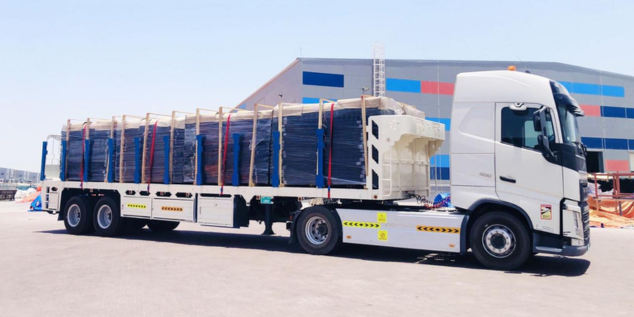
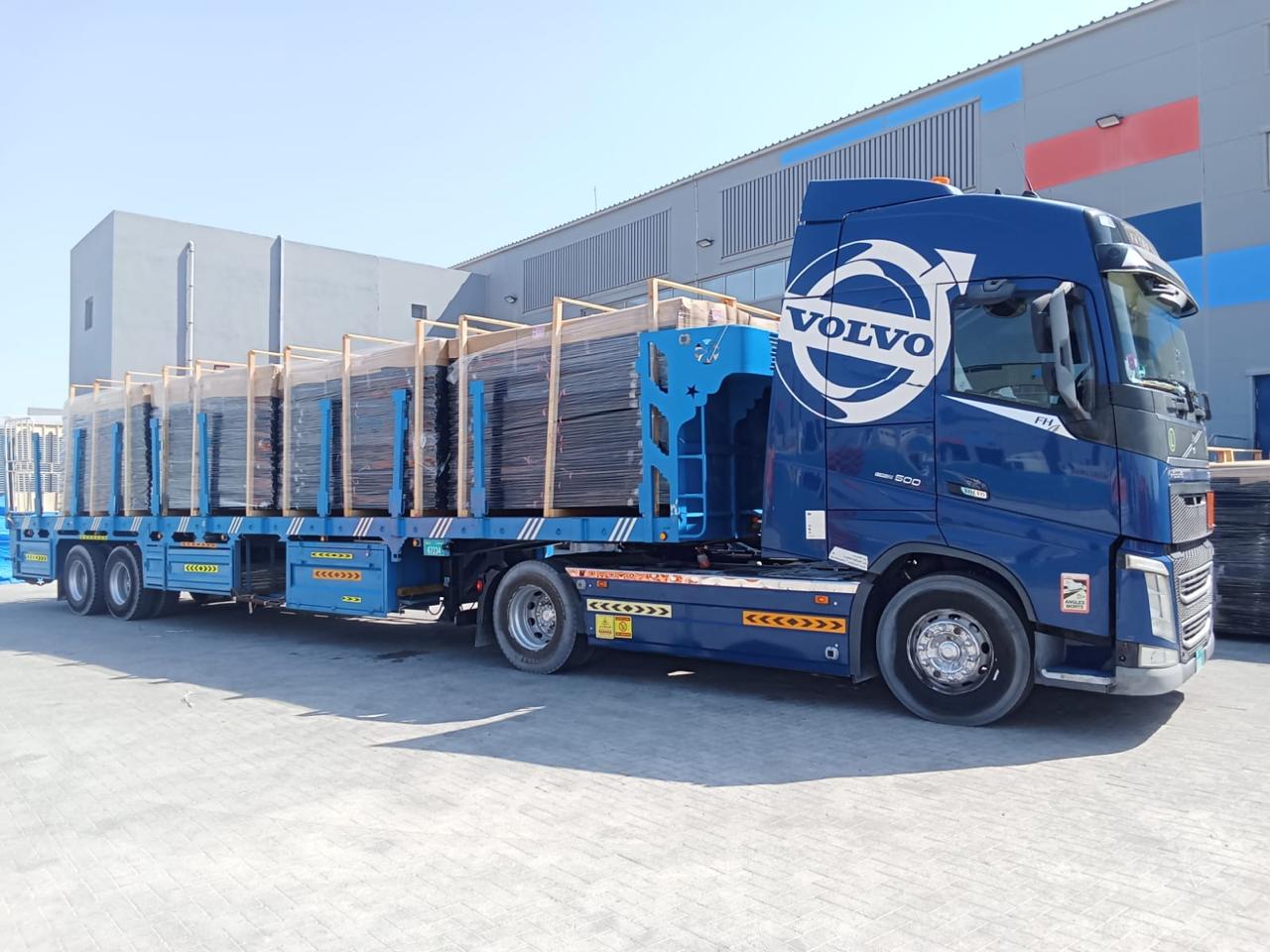
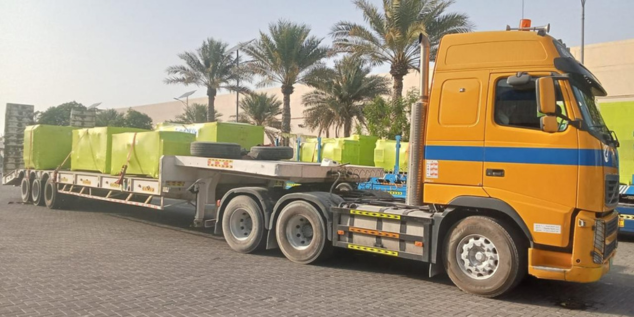
Lowbed trailers are often used for tall or heavy machinery because the lower deck height can help manage overall loaded height. Flatbeds are useful for equipment, steel, containers, construction material and cargo that can be safely loaded and secured on an open platform. The correct choice depends on the equipment height, weight, length, center of gravity, loading angle and the road conditions between pickup and delivery.
Trailer selection should never be based on the name of the cargo alone. Two machines with the same general description can have very different sizes and weights. Attachments, buckets, booms, tanks or protective frames may increase length or height. When exact details are available, the transport team can recommend whether lowbed, flatbed, crane truck or additional lifting equipment is more suitable.
Site access and ground conditions
Heavy equipment movement depends heavily on site access. The vehicle needs turning space, stable ground, safe loading distance, overhead clearance and a clear route from the entrance to the loading or unloading area. A paved warehouse yard is different from a sandy construction site, and a wide industrial road is different from a narrow internal service lane. Access photographs and site contact information are valuable planning tools.
Ground condition matters because heavy vehicles and lifting equipment place pressure on the surface. If the site is soft, uneven or crowded, the customer may need to prepare the area before the vehicle arrives. Site preparation can include clearing parked vehicles, removing obstacles, confirming security access, arranging safety personnel and ensuring the machine is ready for loading.
Load securing and cargo safety
Once equipment is on the trailer, it must be secured according to weight, shape and movement risk. Chains, straps, blocks and proper anchor points may be required. The aim is to prevent shifting during braking, turning or uneven road movement. The driver and operations team should understand where the load can safely be tied without damaging sensitive parts.
Customers should communicate if a machine has fragile components, hydraulic lines, covers, panels or attachments that should not be used as tie points. If the cargo has loose accessories, they should be removed, packed separately or secured before transport. A careful load-securing process protects equipment value and reduces risk on the road.
Permits, timing and route restrictions
Some heavy or oversized movements may require additional route planning or permission depending on dimensions, weight, route and local requirements. Even when a permit is not needed, timing can still matter. Industrial areas, highways, bridges, underpasses, tight turns and construction site access routes may influence when and how the load should move.
The best approach is to share complete equipment details early. Height, width, length and gross weight help the operations team identify possible route limitations. If the load is wide, tall or unusually heavy, the customer should allow enough planning time. Rushed heavy transport increases the chance of delays, access problems or the wrong support equipment being assigned.
Loading and unloading responsibilities
Before dispatch, the customer and transport provider should agree who is responsible for loading and unloading. Some machines can move under their own power, but others need a crane, forklift, ramp, winch or specialized support. If lifting is required, the lifting team should know the equipment weight and approved lifting points. If a ramp is used, the machine approach angle should be suitable.
Misunderstanding loading responsibility is a common source of delay. A lowbed may arrive at the site, but if the machine cannot start or there is no operator, loading cannot begin. A crane may be arranged, but if the site does not have lifting space, the job may stop. Clear responsibility reduces these avoidable issues.
Project movements and staged equipment delivery
Construction and industrial projects often need staged delivery. Equipment may need to arrive in a specific order, with some machines delivered before supporting materials and others after site preparation. Heavy transport planning should align with the project schedule so vehicles do not arrive before the site is ready or after the work team has already lost time.
For staged projects, one coordinator should maintain the movement plan. The plan should list cargo items, vehicle types, pickup and delivery timing, loading method, site contact and any special instructions. This makes it easier to coordinate multiple trucks, cranes or trailers without relying on scattered messages.
How to request an accurate heavy transport quote
An accurate heavy equipment transport quote should be based on facts, not rough estimates. Share machine name, dimensions, weight, pickup and delivery locations, loading method, unloading method, site access details, preferred timing and photos. If the equipment is non-running, oversized, recently repaired or sensitive, say so at the beginning.
This information helps the transport partner assess vehicle type, driver assignment, route, equipment, timing and cost. It also protects the customer from a low quote that later changes because the real job requirements were not visible at the beginning. A detailed request produces a clearer scope and a more realistic plan.
Pre-mobilization inspection points
Before a heavy equipment vehicle is mobilized, the customer should confirm practical inspection points. Is the machine ready to move? Are attachments removed or secured? Is fuel level appropriate for loading? Are loose parts packed separately? Are keys and operators available? Are lifting points visible? These questions sound basic, but they prevent situations where a trailer reaches the site and the equipment cannot be loaded safely.
The transport team should also review the approach to the equipment. A machine parked behind other material, inside a crowded yard or on unstable ground may need site preparation first. If the site requires safety induction, gate pass or permission from a project manager, that should be completed before arrival. Heavy transport time is expensive, so preparation is part of the job, not an optional extra.
Working with cranes, forklifts and site teams
Some heavy equipment movements involve several teams at once: the transport provider, crane supplier, forklift operator, site supervisor, machine owner and receiver. Each team needs to understand its role. The crane or forklift team should know the weight and lifting points. The site supervisor should clear the area. The transport team should position the vehicle safely. The customer should make decisions if the site condition changes.
Coordination is easier when one person is assigned as the main contact. This person does not need to perform every task, but they should be able to connect the right people quickly. Without a single coordinator, drivers may receive different instructions from different site workers. In heavy equipment transport, confused instructions can create safety risk and delay.
Protecting equipment value during transport
Heavy equipment is often costly and business-critical. Damage during movement can delay projects, create repair bills and reduce customer confidence. Protection starts with proper securing, but it also includes route care, loading angle, balanced placement and awareness of vulnerable parts. Mirrors, covers, hydraulic lines, panels, attachments and control areas may need attention before movement begins.
Customers should tell the transport team if equipment has recently been repaired, if any part is weak, or if there are handling limits. If the machine has operating instructions for transport mode, those should be followed. Photographs before loading and after delivery can provide a clear record. This level of care may take a little more time, but it protects the customer from larger problems later.
Heavy equipment transport for contractors and rental companies
Contractors and equipment rental companies often move machines between yards, project sites and customers. Their transport needs are recurring but not always identical. One day may involve a compressor, the next a generator, and another a small excavator or containerized unit. A transport partner that understands this pattern can respond faster because the common equipment types, locations and contacts become familiar.
For rental companies, delivery timing can affect revenue. If equipment reaches the customer late, the rental period may start with frustration. If collection is delayed, equipment may not be available for the next booking. Reliable heavy transport therefore supports both operations and income. A planned process for delivery, collection, inspection and handover can make the entire rental cycle smoother.
What should be confirmed after delivery
After delivery, the receiver should confirm that the equipment arrived at the correct location, in acceptable condition and with any accessories or documents included. If the equipment must be positioned in a specific area, that should be part of the original instruction. The driver should not be expected to decide final placement without site approval, especially when ground conditions or safety rules are involved.
Proof of delivery can include a signature, photographs, time stamp and receiver name. For project work, this record is useful for internal reporting. For rental and industrial movements, it helps confirm responsibility transfer. A complete delivery record closes the movement professionally and reduces later disputes.
Risk assessment before moving machinery
A basic risk assessment should look at the machine condition, access route, loading area, unloading area, lifting method, trailer suitability and people involved. The purpose is to identify anything that may stop the movement or create unsafe handling. For example, a machine may be ready to move, but the access road may be blocked by parked vehicles. A trailer may be suitable, but the receiving site may not have enough turning space.
Risk assessment also helps estimate time more realistically. Heavy equipment transport may involve slow loading, careful securing, route checks and controlled unloading. If the customer expects the movement to finish as quickly as a small delivery, the schedule will be unrealistic from the start. Setting the right expectation protects both the transport team and the project team waiting for the equipment.
Final planning reminder for operations teams
Before every important cargo movement, take one minute to confirm readiness, route, receiver, documents and vehicle suitability. That small pause can prevent long delays later. Transport is most reliable when the details are visible before dispatch, not discovered after the truck arrives. For UAE businesses managing daily deliveries, project cargo or urgent freight, this habit creates a more professional workflow and gives customers better confidence in the delivery promise.
The best results come from repeatable discipline: clear requests, accurate cargo information, prepared loading areas, realistic timing and a transport partner that communicates quickly. These practical habits may look simple, but they are the foundation of safe cargo movement and dependable supply chain performance.
FAQ
What vehicle is used for heavy equipment transport in the UAE?
Lowbed trailers, flatbeds, crane trucks and other equipment may be used depending on weight, height, length, loading method and site access.
What details are needed for a heavy transport quote?
Provide equipment photos, dimensions, gross weight, pickup and delivery locations, loading and unloading method, timing and any site restrictions.
Can machinery be transported if it cannot move by itself?
Yes, but the transport plan must include the correct loading method such as a crane, forklift, winch or other support equipment.
Why are photos important for heavy equipment transport?
Photos help the operations team understand the actual machine condition, lifting points, attachments, access and loading environment before assigning the vehicle.
Conclusion
Heavy equipment transport succeeds when exact cargo details, site access, trailer selection, loading method and communication are handled before dispatch. Focus Global supports UAE businesses with practical planning for lowbed, flatbed, crane-assisted and project equipment movements.